Scientists have confirmed one of the most extensive detections yet of complex organic carbon on Mars, found in mudstones in an ancient dried‑up river channel in Jezero Crater.
The findings, published in Science Advances, are based on hundreds of detections of macromolecular carbon (MMC) – large, tangled networks of carbon atoms – within two rocks sampled by NASA’s Perseverance rover.
The rocks are part of the Bright Angel formation in Neretva Vallis, a channel that once fed a lake inside Jezero.
It’s thought to be the only detection of macromolecular carbon on a natural rock surface on Mars.
More on Mars
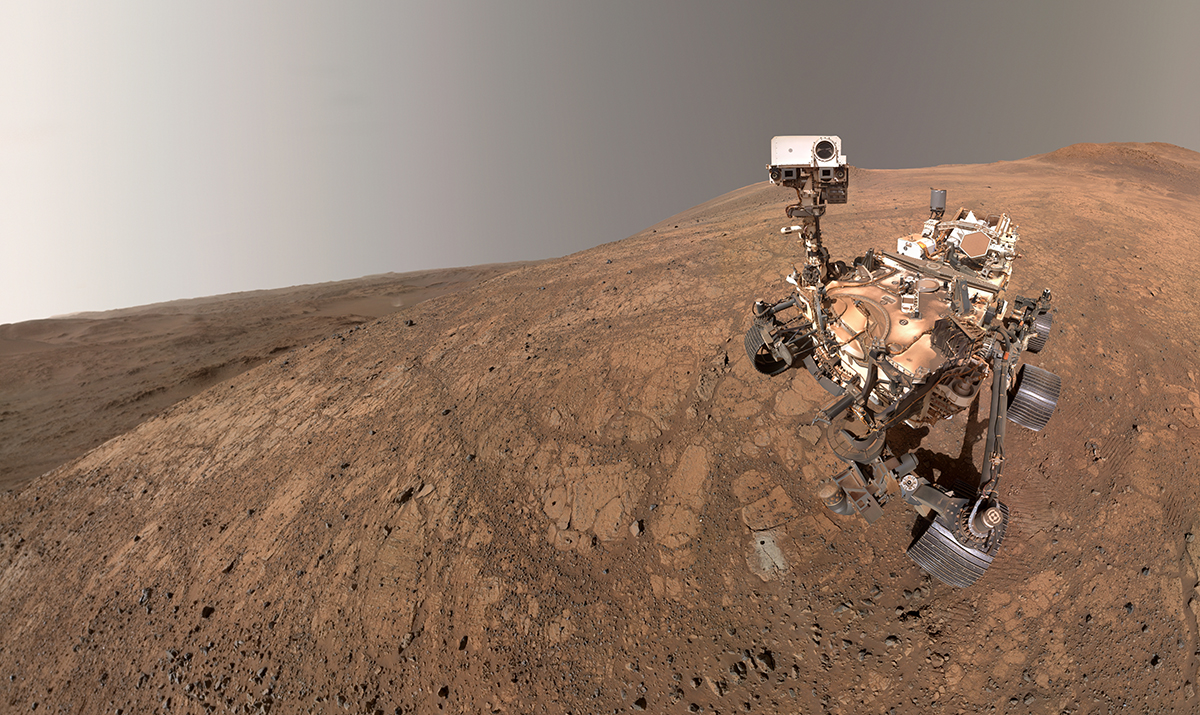
Using the SHERLOC instrument – which employs an ultraviolet laser and fluorescence spectroscopy to probe the rocks – the team found complex carbon in both sedimentary minerals and later-forming carbonate and sulphate minerals.
This suggests the carbon was incorporated into the rock during at least two stages of its history: when sediment was first deposited and later when groundwater altered them.
However, the observations don’t reveal whether the molecules originated through biological or non-biological processes.
The discovery builds on excitement generated when Perseverance identified distinctive ‘leopard spots’ on rocks at the same site in 2024.
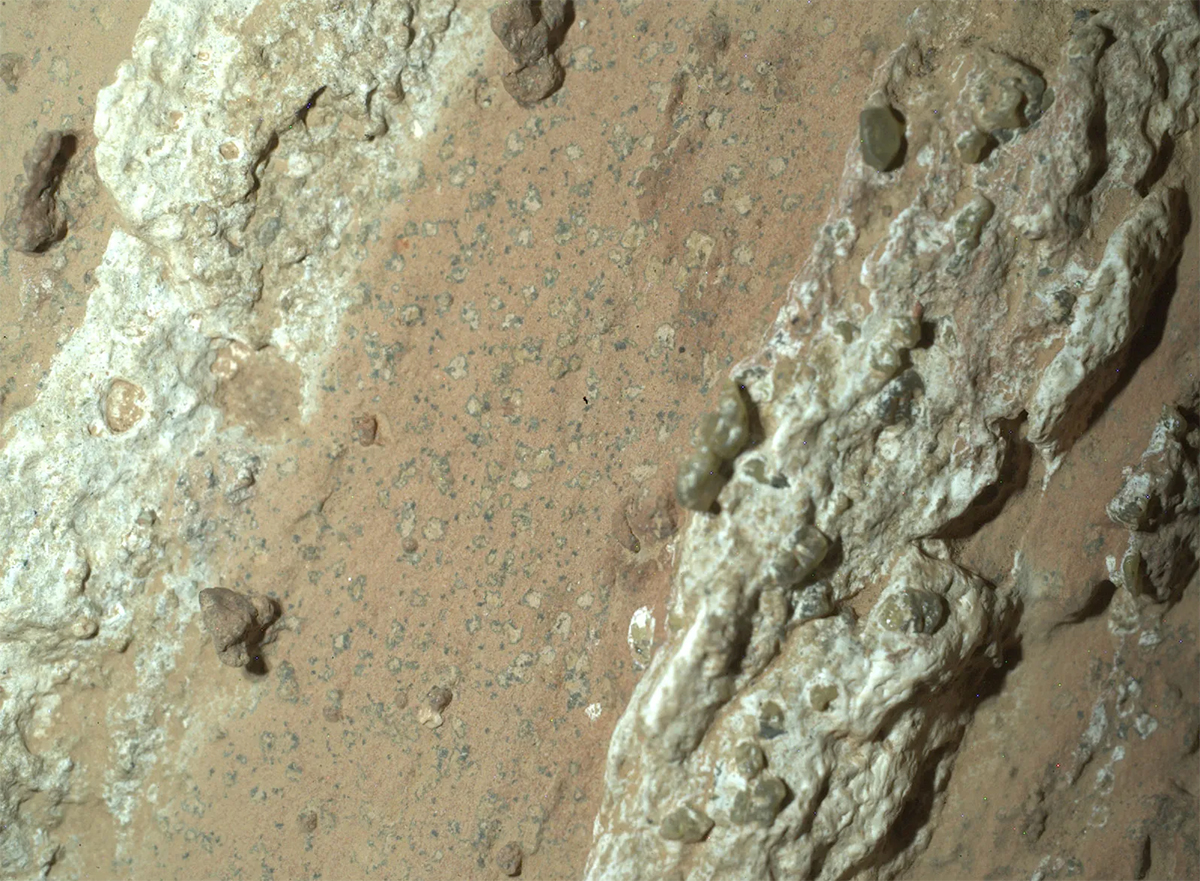
On Earth, such millimetre-sized spots can be created by chemical and mineral reactions associated with microbial activity, although alternative abiotic explanations remain possible.
Finding complex organic carbon in the same ancient river deposits adds another piece to the puzzle.
Organic molecules are the building blocks of life, but they could also be present through entirely non-biological processes, including hydrothermal reactions or delivery by meteorites.
The results strengthen the scientific case for returning Perseverance’s cached samples to Earth.
The rover has already sealed more than two dozen samples for retrieval by a future Mars sample-return mission.
Laboratory analysis on Earth could determine the precise chemical structures of the organic compounds – measurements beyond the capabilities of the rover itself – and help establish whether they record ancient geological activity, prebiotic chemistry or, potentially, evidence of past microbial life.
Is this really a sign of life on Mars?
Words: Chris Lintott
There are now a host of things – from chemicals like those found here to ‘leopard spot’ rocks – that, if seen on Earth, would scream ‘life’ to a geologist: if you see something life does, you can conclude life did it.
But on Mars, the opposite is true. When we see signs of biology, we need to set about ruling out every other possibility.
The organic molecules might have come from life or from geological process – or arrived on a meteorite.
Learning to tell the difference is the challenge facing astrobiologists studying everything from the surface of Mars to the fountains of Enceladus – and it’s not going to be easy.