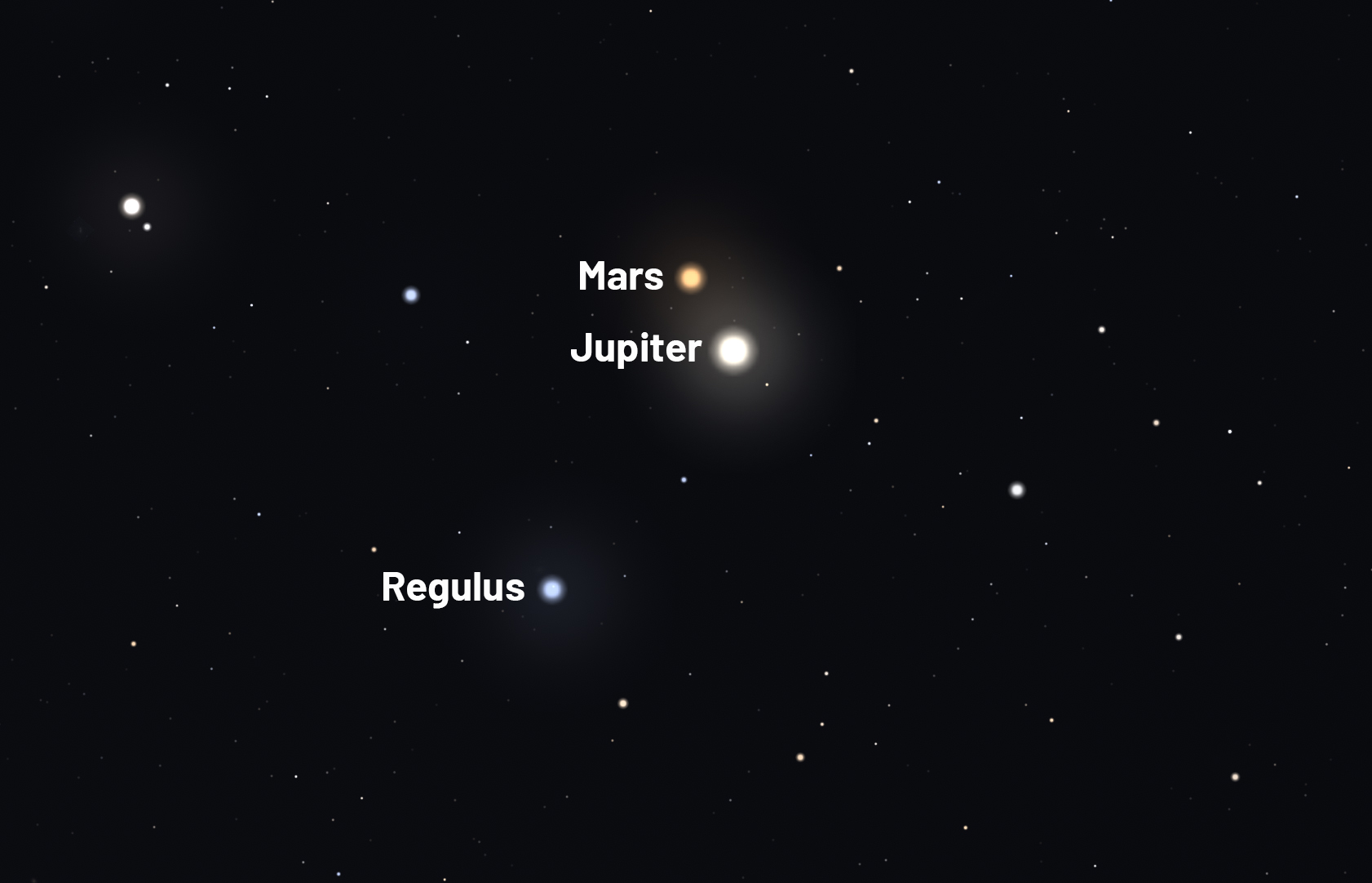
Mars and Jupiter will be at their closest together in the morning sky this weekend and from 14–17 November 2026, appearing about 1° apart, or the width of your little finger at arm's length.
They're high in the south-southeast before sunrise, which means you need to look in that direction about an hour before dawn.
No telescope is needed – Mars and Jupiter will be easy to see with the naked eye.
Set your alarm clock, have your warm clothes ready and decide on your observing location.
This weekend we're about to see one of the astronomical highlights of the year.
Mars–Jupiter conjunction: all you need to know
Throughout November 2026, Mars has been catching up to Jupiter, and they reach their closest approach on 14–17 November.
Over the mornings of 14–17 November, Mars passes around a degree north of Jupiter, making them appear very close together in the sky.
They'll look like a tight 'double star' and their apparent distance from one another will be about the width of your little finger held at arm's length.
Both planets are very bright and easy to see. They're also high in the sky, meaning you don't need a flat horizon to catch them.
Mars and Jupiter form a triangle with Regulus, the brightest star in the constellation Leo.
You don't need binoculars or a telescope to see them. Just head out, look up to the southeast and spot them about an hour before dawn.
Read more

Two planets together? It's all a matter of perspective.
When two objects in the night sky are close to one another, it's known as a 'conjunction'.
A conjunction could involve the Moon and a planet, the Moon and a bright star, or two planets, for example.
Of course, it's all a matter of perspective. Mars and Jupiter are actually hundreds of millions of miles apart in space, orbiting the Sun at different distances and speeds.
But because their orbits happen to align along our line of sight in the morning sky during November 2026, they appear side-by-side from our perspective on Earth.
The planets orbit the Sun in what is essentially a flat plane, like a disc rotating around the Sun at the centre of the Solar System.
So when you see Mars and Jupiter close together this weekend, you're looking out across the Solar System, observing nearby Mars and much-more-distant Jupiter
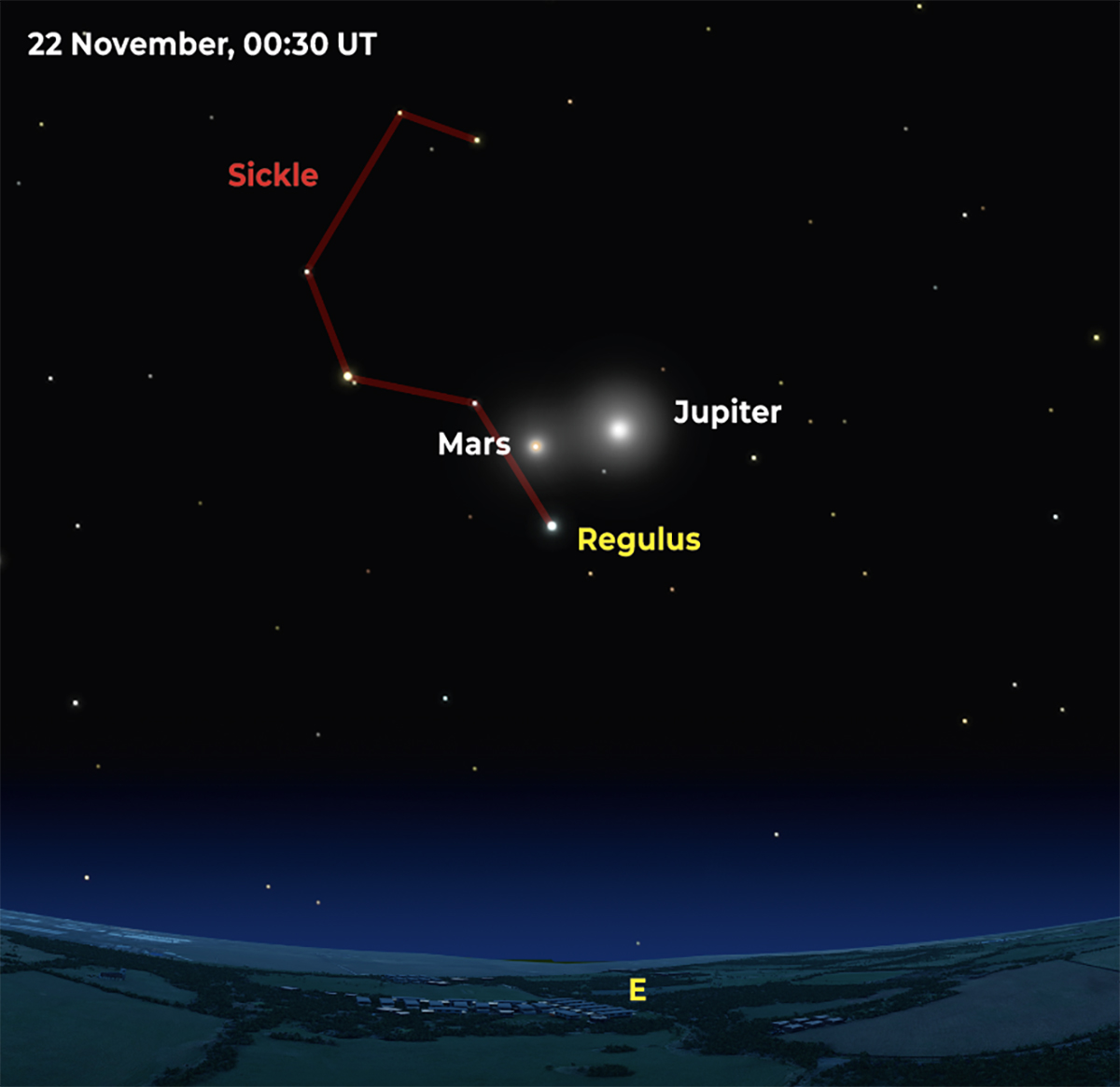
Where, when and how to observe this weekend
- Look towards the southeast about an hour before sunrise. Both planets are located in the constellation Leo.
- Focus on the mornings of 14–17 November for the closest approach, when Mars passes about a degree north of Jupiter.
- If you get a row of clear mornings, view on multiple dates to see how the locations of Mars and Jupiter change over time.
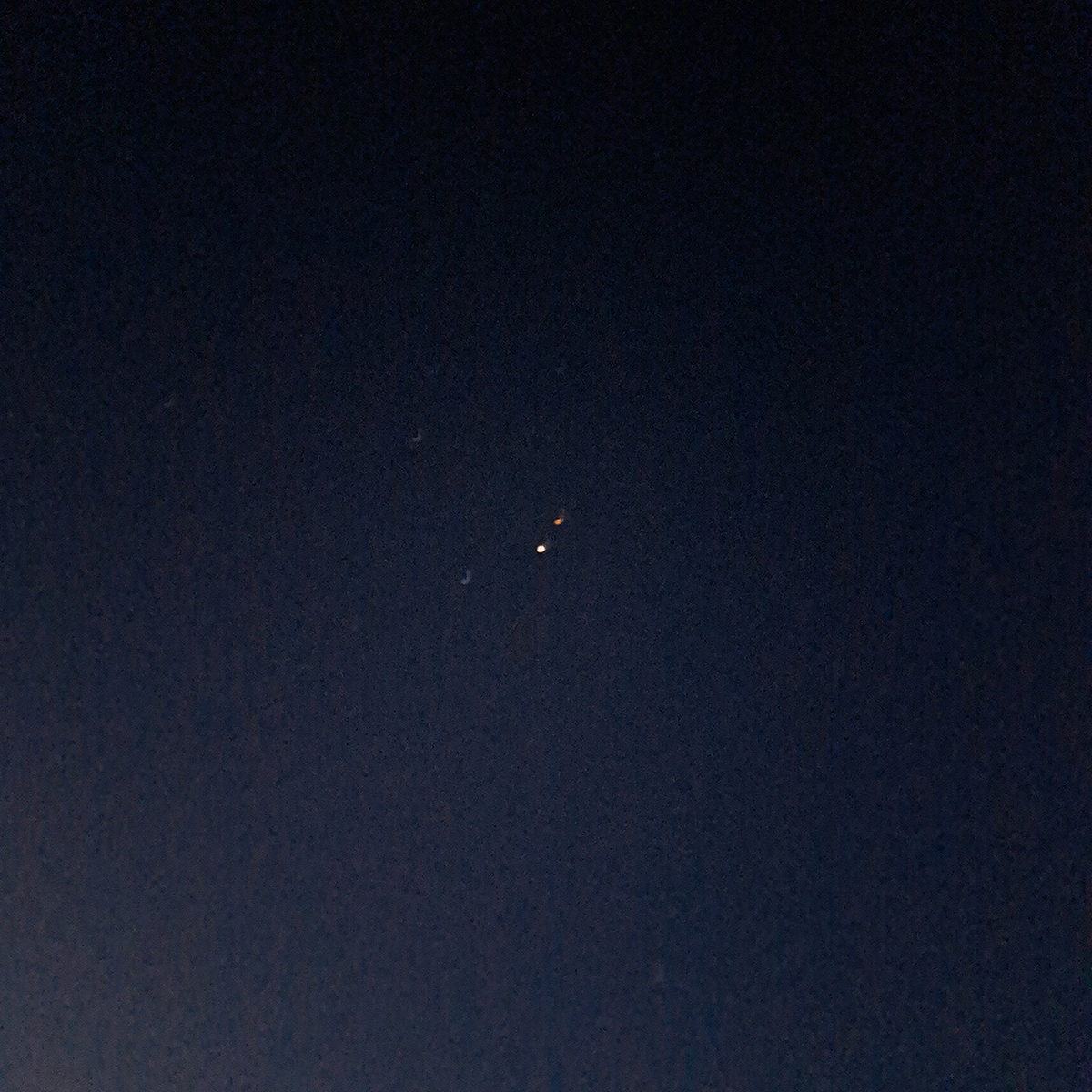
- Try photographing with your smartphone. Use a smartphone tripod or, if you don't have one, improvise! Prop your phone up against a fence or on a flat surface resting against a rucksack, etc. Then use your phone's 'pro' mode to tweak exposure and ISO to capture Mars and Jupiter together.
if you observe Mars and Jupiter's close approach this weekend, share your observations and images with us by emailing contactus@skyatnightmagazine.com