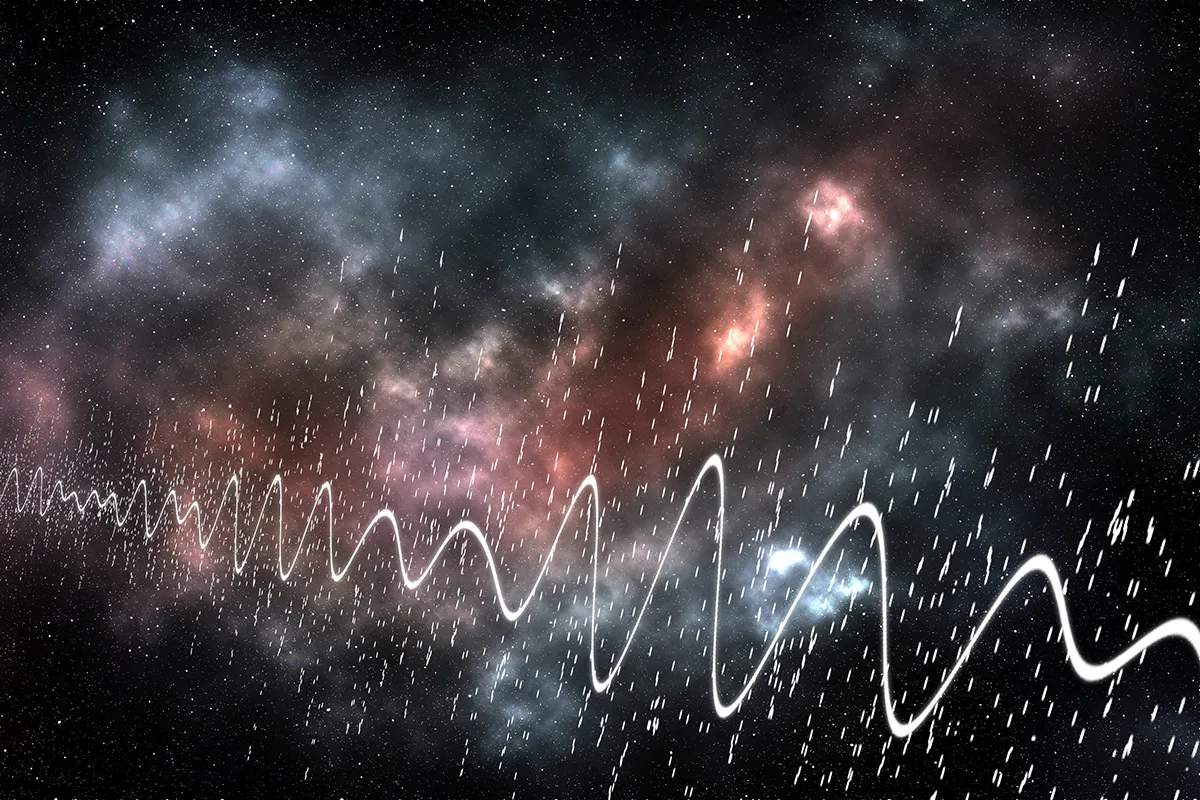
Researchers have captured direct radio wave emissions originating from a planet outside our Solar System.
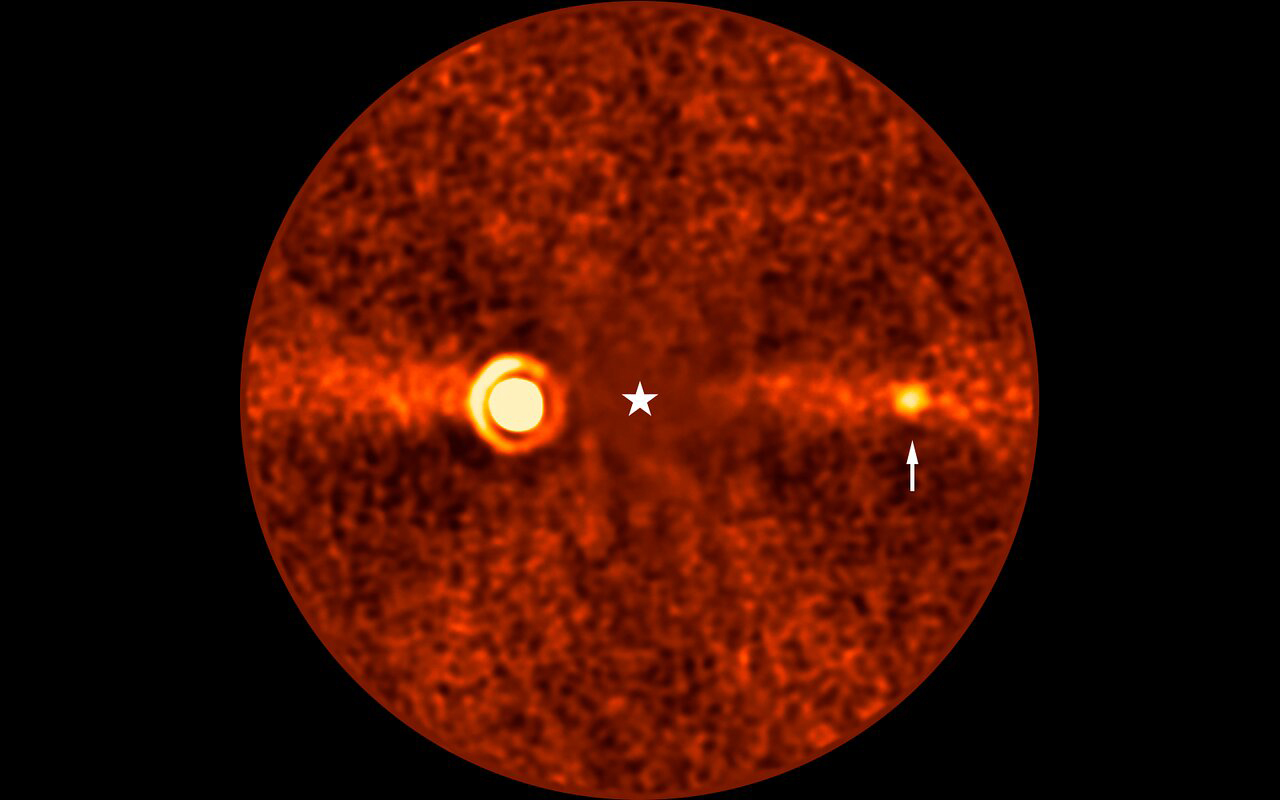
Using South Africa’s MeerKAT radio telescope array, an international team of astronomers successfully detected variable radio bursts coming directly from Beta Pictoris b, a massive gas giant exoplanet located about 63 lightyears away.
But while many of us may hear of radio signals detected at a distant planet in our Galaxy and instinctively imagine a detection of alien life, in this case the discovery is not a sign that E.T. has been detected.
The discovery is, however, a landmark find that will help astronomers learn more about the types of planet that exist beyond our Solar System – and where we might find life.
More signals in deep space

Chasing signals across the cosmos
For decades, scientists have hunted for radio emissions in deep space.
When it comes to exoplanets – planets beyond our Solar System – astronomers are interested in detecting radio waves similar to those produced by the large gas giants Jupiter, Saturn, Uranus and Neptune.
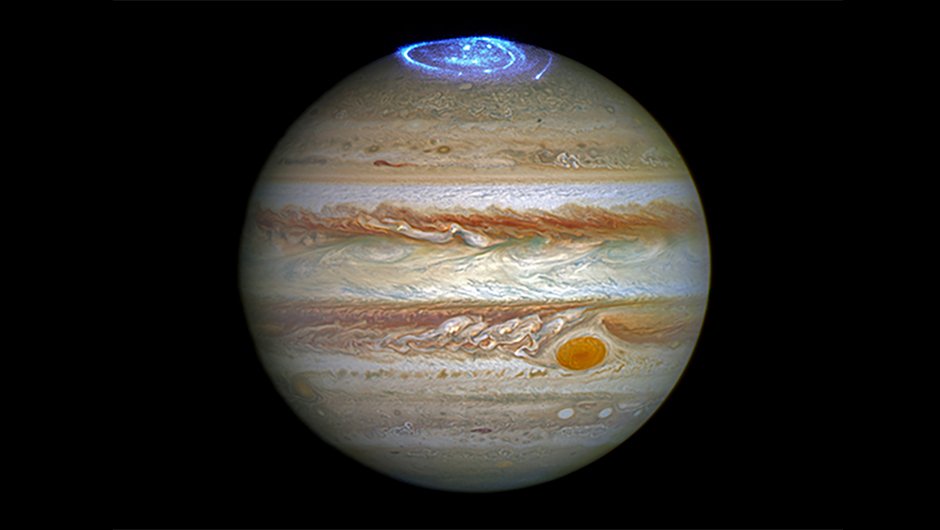
Scientists say Jupiter is the strongest auroral radio source in our Solar System.
So, learning more about radio waves emitted by other Jupiter-like planets across the Galaxy could reveal more about what those planets are like, what their magnetic fields are like and whether they produce visual displays of aurora like the Northern and Southern Lights on Earth.
It could also tell us whether those planets have protective magnetic fields that could protect emerging life from the ferocious power of their host stars.
However, separating an individual planet's faint signal from the radio signal of its host star is difficult.
Targeting a distant system
The team behind this study targeted planet Beta Pictoris b, which orbits star Beta Pictoris, 63 lightyears from Earth. That's just a stone's throw in cosmic terms.
Beta Pictoris made headlines in July 2026 when astronomers photographed one of its other orbiting planets, Beta Pictoris d, making it the faintest exoplanet ever directly imaged from Earth.
The subject of this study, however, is Beta Pictoris b, which is about 10–12 times the mass of Jupiter.
Crucially, the star it orbits is magnetically quiet, say the researchers, which enabled them to isolate a particular radio signal to Beta Pictoris b.
It's the first time a radio signal has been confirmed as coming from a single planet, rather than from the whole star system in general.
Magnetism and aurorae across the Galaxy
The team say the physics behind the signals is the same as the mechanisms that power aurora displays on the planets in our Solar System.
As energetic, charged particles from the Sun spiral down along magnetic field lines toward a planet's polar regions, they excite particles in the atmosphere, creating the colourful aurora displays we see on Earth.
And because the aurora correlates with the planet's magnetic field strength, the detection has allowed the team to calculate the strength of Beta Pictoris b's magnetic field. It's thousands of times stronger than our planet's.

A new era for exoplanet science?
The discovery is a milestone in the study of distant planets and the search for life beyond our Solar System.
Because magnetic fields play a vital role in protecting planetary atmospheres from being stripped by stellar winds – just as Earth's magnetic field protects us from the power of the Sun – understanding them is crucial in the search for habitable worlds beyond our Solar System.
And with more powerful radio observatories on the horizon, astronomers may be able to use the lessons learned from this study to target other gas giant planets.
That could give us a new, unique way of learning more about the types of planets orbiting stars scattered across our Galaxy and whether they might be able to host life.
Read the full paper via arxiv

