Why does Easter take place at a different time each year, and why does it some years fall a lot later than others?
Whether you’re a follower of the Christian religion or not, Easter is an important holiday in many countries around the world.
Easter Sunday 2026 falls on 5 April, but in 2027 it falls on 28 March.
Why does this religious festival move around, falling anywhere from late March to late April, and what does that have to do with astronomy?
Quite a lot, as it happens!

That’s because Easter, according to Christian tradition, commemorates the crucifixion of Jesus Christ, which is supposed to have occurred on the day of the Jewish festival Passover.
And as the date of Passover varies each year according to lunar cycles, so does the date of Easter.
Hence it becomes a 'moveable feast' that falls on different dates each year.

Determining when Easter falls
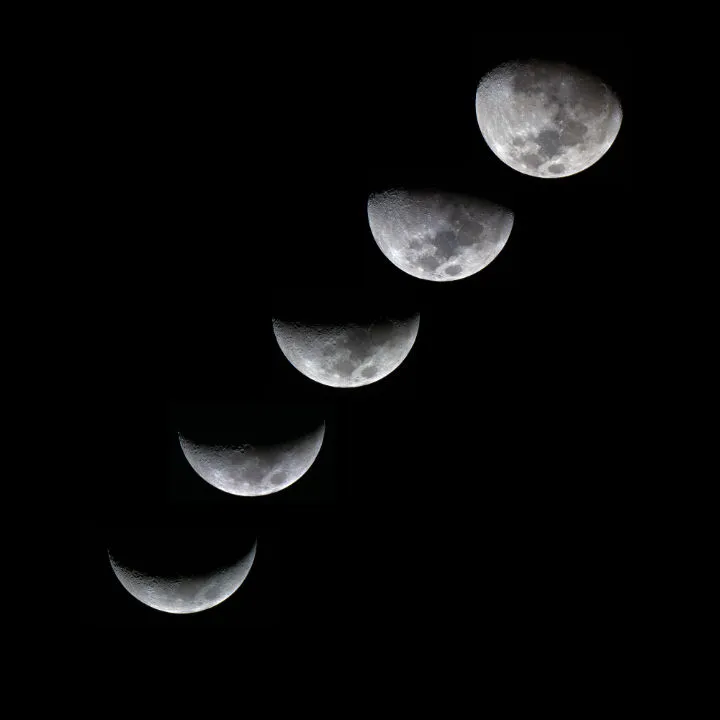
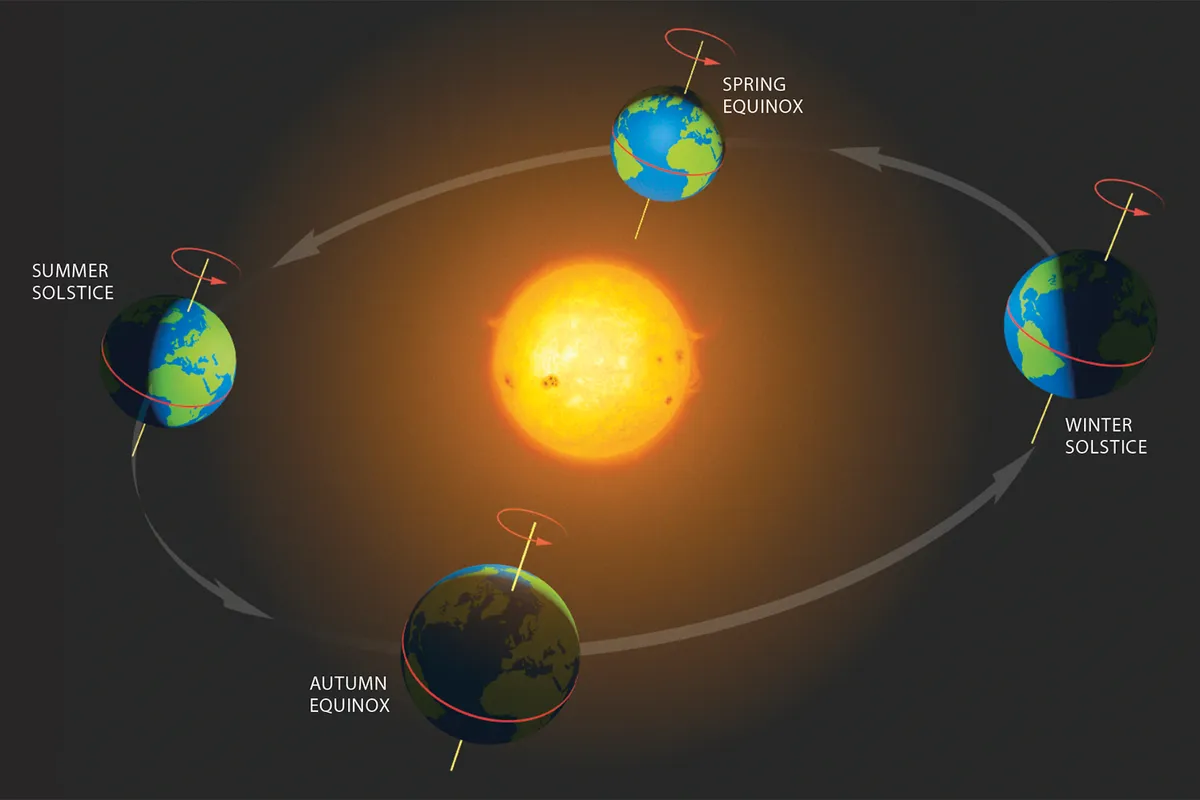
Easter falls on the first Sunday after the first full Moon after the vernal equinox, which in 2026 is the 'Pink Moon' of 2 April.
That’s the system decreed by the Roman emperor Constantine at the Council of Nicea in 325 AD, and it sounds easy enough to understand – it’s just that the ACTUAL picture is a little more complicated.
The first problem is that our knowledge of the heavens wasn’t as advanced 2,000 years ago as it is today.
Different cultures and societies would calculate lunar cycles differently, with the result that Easter could end up being celebrated on different days in different places.
It wasn’t until 664 AD, for instance, that a synod convened by King Oswy of Northumbria at Whitby Abbey decreed that England would follow the Roman system of calculating the date of Easter.
To complicate matters, there isn’t a single, fixed calendar that’s been in use since the dawn of time.
In ancient Europe, the Roman calendar – based entirely on the movements of the Sun and Moon, as seen from Earth – was replaced in 46 BC by the Julian calendar, which was invented by Julius Caesar.
In 1582, Pope Gregory III then devised the more accurate Gregorian calendar, which we still use today. But take-up of this calendar wasn’t immediate.
For more on this sort of thing, read our guide on why February only has 28 days.
Britain, for instance, didn’t adopt the Gregorian calendar until 1752.
That's largely because, at the time of its introduction, it was seen as a product of the Catholic church from which England had recently divorced itself.
Perhaps more importantly, the Gregorian calendar has never been adopted by the Orthodox Church.
So while countries in eastern Europe now use the Gregorian calendar, Orthodox festivals in those countries are determined according to the Julian one.

And there’s one more thing to take into account: neither the vernal equinox nor the full Moon, as used in the formula above, are necessarily astronomically correct!
In the real world, the precise dates of equinoxes and Full Moons can fluctuate, depending on where you are on Earth.
So if you applied the formula using real-world dates, you could still end up with two different dates for Easter in two different countries.
Standardising Easter
So to keep things universal, the formula above, as applied by the Christian church, assumes that the vernal equinox is ALWAYS on 21 March (which it isn’t).
And refers not to actual full Moons as seen from wherever you happen to be, but rather to a series of arbitrary dates derived from the 19-year Metonic Cycle, over which time the Moon’s phases are believed to repeat themselves exactly.
Over the years, several different people have come up with algorithms for working out exactly when Easter falls.
But these involve some very complicated maths, so it’s perhaps easiest if we just tell you when Easter is for the next few years.
Upcoming Easter Sunday dates
- 2026: 5 April
- 2027: 28 March
- 2028: 16 April
- 2029: 1 April
- 2030: 21 April
That’s the Catholic and Protestant Easter, anyway! For followers of the Orthodox Church, Easter will fall on the following dates…
- 2026: 12 April
- 2027: 2 May
- 2028: 16 April
- 2029: 8 April
- 2030: 28 April